


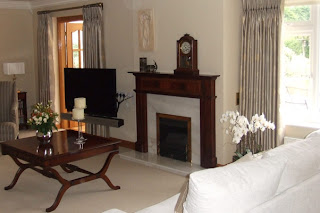
Some of the most popular exteriors in America are Modern, Art Deco, Victorian and Colonial Revival. Logically, many of these home owners would choose to complement the home interior design by using unified elements. If the exterior is an Arts and Craft bungalow, for instance, you may want neutral tone walls, stained glass lights and mission oak furniture. However, if you have a Cape Cod, then a country theme might be more appropriate for your interior. You can gain insight and custom designs from a trained professional to help you make the best choices.
Art Deco first gained popularity in the 1920s. While the glitz, glamour and gaudiness diminished following the Great Depression, there is still a soft spot in the American heart for the lost innocence of this classic time period. In the twenties and thirties, the professional interior designer saw Art Deco as both elegant and ultra-modern. Combining aspects of airplane design and Futurism with Old World mosaic patterns and Cubism, the end result was something very interesting that spoke to the aristocracy who wanted nothing bland or boring.
Borrowing from austere stainless steel but also exotic zebra skin and saturated modern colors, Art Deco interior design trends offer the homeowner a museum-type vibe with an array of conversation pieces. Curved mirrors, Tiffany lamps, lacquered furniture, velvet drapes, silk lamp shades, small furniture, thick carpeting and symmetrical geometric shape patterns can all add a hint of Deco to a room. "It's about glamour and getting a glimpse of those bygone days where TV was less important and it was about cocktail hour and company," furniture designer Barclay Butera tells HGTV.
The Arts and Crafts home interior design style took America and Great Britain by storm from 1850 through to 1920. Following the advent of mass production and rampant industrialism, artists like John Ruskin and William Morris called for a return to rustic craftsmanship. Simplicity meets high quality with clean, elegant furniture that is as practical as it is beautiful. William Morris said in 1882, "Have nothing in your houses that you do not know to be useful, or believe to be beautiful."


